Episode Transcript
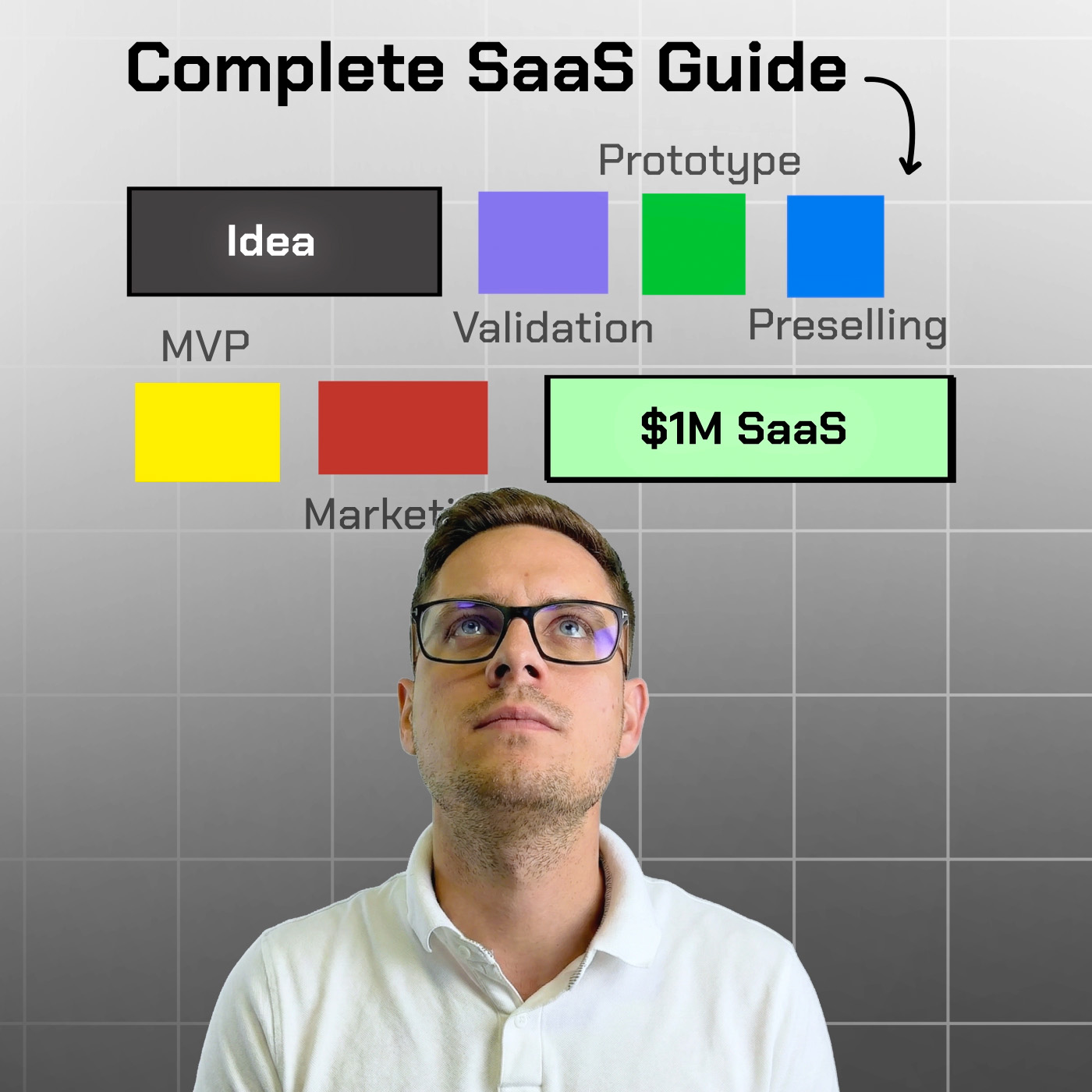
[00:00:00] Speaker A: For the last 10 years, starting a service business was really easy and starting a SaaS was really hard. Is this gap closing? You have agency owners grinding 60 hours a week for a business worth three times profit while their neighbor is building boring software tools for the same clients is getting valued at 10 times revenue. We're entering a new era of SaaS which I call the service to SaaS. And the people leveraging this opportunity are building million dollar SaaS companies without spending as much money or time to build compared to people who did in the last decade. In other words, while you might see a flood of videos or articles pitching the next big SaaS ideas, trust me, those ideas are usually very broad, done quickly and crowded. The real gold is in these niche products that only service business owners can craft because they already know those pain points that VC backed IT grads need to painfully figure out over years. Now, if it's your first time here. Hey. Hey. I'm Victor Keller. I've helped over 300 SaaS founders with some brands scaling to six or seven figures such as Wiser or Symphony. And so in this video I'll reveal my service to SaaS framework. We'll cover everything from finding that million dollar idea in your service business, validating it, building the right MVP and launching a go to market strategy. Get it first. 100 customers also hear directly from founders who built 6 to 7 figure SaaS. Businesses themselves sharing exactly how they did it. By the end, you'll have a roadmap that'll help you build your SaaS in as little as 90 days. If you're thinking about or if you're already in the process of building a SaaS. This will save you months of trial and error, so stick around.
First, we have to know why we're Even building a SaaS business instead of other business models. To do that, we have to be honest about what's happening in service businesses. Right now you're dealing with client dependence and endless scope creep. You've hit scaling limits because there are only so many hours in a day. Cash flow is a constant headache because clients pay net 30, net 60. You're managing talent that is expensive and hard to retain. And you're stuck in the feast and famine cycle where some months are drowning in work and others you're just scrambling to fill a pipeline. But the worst thing is when you finally want to exit, your business is valued like what? Maybe three times profit if you're lucky. Lucky because without you, let's be honest, it doesn't run. Now compare that to software As a service, instead of a handful demanding clients, you have hundreds or thousands of small customers, reducing dependence on a single one. Instead of hitting a ceiling, your revenue scales indefinitely without proportional increases in costs. Instead of chasing payments, customers pay upfront, monthly or sometimes annually. And instead of managing a large team, you just run lean. And instead of unstable revenue, you have predictable recurring income. And when you exit, you're looking at 5 to 10 times revenue multiples, sometimes even more. But you might be asking yourself, isn't building successful software incredibly hard, especially when you're non technical? Well, yes and no. To succeed in SaaS you actually need three things. Number one deep industry insight to discover real problems with worth solving. Number two patience and cash flow to sustain the first six to 18 months until product market fit. And then number three, basic understanding of software development, which you'll already get from this video and many others on my channel. Here's what's changed in the last decade. Ten years ago it was technically much more demanding to build software and there was software lacking everywhere. So the people who are best equipped to build a SaaS were developers who found vague problems, built software on their own, and felt the low hanging fruit ideas. Today those slow hanging fruits are gone and developers are struggling as founders because their skill developing software is not the deciding success factor anymore. Because there are still so many niche SaaS ideas out there that developers simply can't think of. This is where your unfair advantage as a service business owner comes in. Take a look at Zenmaid, for example, a SaaS for cleaning businesses that scale to $5 million in arrival, whose founder I interviewed last month. As an agency owner, you know the real problems. You have the ideas, and with VC money still well below its 2021 peak developer salary, stagnating and AI making it faster and cheaper to build software than ever, this is honestly the best moment in history for independent service business owners to launch their own software products. It's the perfect time to take over their niche and build one of those not Even so big SaaS businesses that can sell for millions.
Now how do you even find a profitable SaaS idea? Your best SaaS ideas aren't going to come from browsing product hunt or copying.
[00:05:07] Speaker B: What works in other industries.
[00:05:09] Speaker A: They're already hiding in your service business. Your job is to take a look at three sections of your business. Finding customers, serving customers, and tending to existing or past customers.
For each section you just list your process, then list the pain points in each process. Where do things break down? What takes too long, what's inconsistent? Next List the software you already use and the pain points there. What's missing? What do you wish it did? What forces you to use three tools when one should work? Now circle the pain points where you would personally pay for better software or pay significantly more because fixing that pain point would change something significant in your business. And Those are your SaaS opportunities. By the way, if you want hands on guidance to turn this into profitable SaaS, check out the workshop link in the description below. I'll walk you through a complete roadmap for your specific SaaS idea. Live on the call from validation to tech decisions, the right developers and very clear next steps. Now you can't just pick any idea. If you do, you'll end up building a cheaper, crappier version of an established player and they'll just crush you. There's one specific filter your idea has to pass. I'll show you how to use it in a minute. But first let me show you the three most important patterns for building successful SaaS businesses in a specific industry that I've noticed from my experience and that is number one, solving an industry wide bottleneck. For example, when Bloxy didn't exist, the collaboration between an author of the book and an editor was lots of word files lost in email threads. So Anthony Joyner identified a specific point where the entire process ground to halt and build a workflow to fix it. So if your industry has a messy middle that everybody just accepts as part of the job, that's where you have to look. Number two build an industry specific CRM. Generic tools like Salesforce or Trello are great, but they aren't built for your specific day to day look at Zenmaid, they just built a management system tailored specifically for maid services that it doesn't even need. Most features a classic CRM has if you're currently using three different tools to manage one client because the big guys don't understand your niche, build the lightweight version that does. And number three, productize your high ticket service. This is what Symphony did. They took what used to be an expensive manual custom service and turn it into a self service standardized software product. Look at the tasks you charge the most for the ones that require your highest experience. If you can automate the magic you provide and offer it as a software tool for a fraction of the price, you've just found your product and there are a ton more SaaS patterns for you. And I've actually put together a list of nine winning patterns with real examples in a workbook. So if you want it, just come in SaaS business and I'll send it over. So your only job for the first 10 days is to find good SaaS opportunities. And as a business owner you have an unfair advantage over your average developer founder who which is that you already have tons of customers and market data available. You know your ICP's exact pain points, fears, suspicions and dreams. And that's your hidden advantage. And that is what Jamal did. Jamal is the founder of Wiser who turned a common industry frustration into a six figure SaaS in less than a year. So let's hear it from Jamal himself.
[00:08:40] Speaker C: About what he discovered in B2B sales. There's, you know, these different segments and you start with really small companies, SMB and then you graduate to mid market and then commercial and then interact, enterprise, strategic, etc. And my focus is at the top end. So my theme is how to go from a transactional seller to a strategic seller. So oftentimes I'm leading sellers who have this ambition to go up this curve and I'm teaching them stuff that either they knew a little bit about but not a lot, or you know, it's kind of a mystery and I'm opening their eyes and those are more strategic ways of selling. And in that pursuit I would see there's one, teaching a skill, but then there's two executing that skill in a workflow like doing deep account research on an account instead of just trying to call in with a generic message, doing a whole bunch of research to say hey, I see exactly what's going on in your, in your company and here's what's missing. And it's more of the consultative approach, but you can't do that when you have a ton of accounts. But teaching sellers how to do account research and how to craft a point of view and the copywriting behind great message storytelling, all these kind of things. You can teach them the basics of the or the steps in a couple hours, but for them to do that, even if they know how, it takes a long time.
[00:09:59] Speaker A: So he built his SaaS around it. Instead of them having to research manually for hours, he built a tool powered by AI that would do all their research for them. That's one way to find your idea, identifying what your clients struggle with. There's another powerful pattern hitting your own scaling ceiling. Meg, the founder of Integral Studio, a digital marketing agency for artists such as Future Travis Scott and 21 Savage, started Symphony A7 figure SaaS using his pattern. So let's hear it directly from him.
[00:10:30] Speaker D: The problem we were solving for a lot of our clientele, at least in music, was helping them resolve data fragmentation as a means to doing better marketing. And so they would call us when it was like, hey, we have XYZ artists dropping an album and they have this many thousands of dollars to spend on their marketing. We be the guys they call. But our kind of secret sauce, so to speak, was that we were the data guys. So we'd be going in there and like looking at their LinkedIn bio, their Shopify, their Spotify, their social media data and doing the hard work of like synthesizing it so we knew how to set up the advertising. And then we sit there sometimes for hours, or ad guy would sit there and make audiences, but by hand and meta ads manager and then retarget and do all that and do reporting by hand. So it kind of got to a place where we hit scaling limits with our agency. If we didn't automate some pieces of it, we would be at a place where we literally could not sell more because it was so manual. So I think this was around like middle of 2019 where we kind of realized either we built tech to automate this or we just be have a ceiling of revenue we could bring in because of how intense if it was.
[00:11:35] Speaker A: So both Jamal and Meg went through the same realization. They were doing something manually over and over again that took hours. Their service business had a ceiling and automation was the only way forward. That constraint became their SaaS idea. Before you commit to building your idea, you need to understand one critical thing. What separates a 10k site project from a million dollar SaaS? Million dollar SaaS idea significantly improves how a large enough target audience can get a specific compared to competitive alternatives. Jamal could have looked at his market and said, these enterprise sellers use Salesforce. I'll build a cheap CRM to compete. That would have been a disaster because he would have been building the cheaper, crappier version of the incumbent. Salesforce has thousands of developers and billions in resources. So instead Jamal built wiser AI. Wiser doesn't try to be a CRM. It does one thing exceptionally well.
Accelerate account research using AI.
Now that you have the idea, the next step is validation, which is where most founders stumble. In fact, studies analyzing many startups show that around 90% fail, not because they didn't validate, but because they validated the wrong things. So here's how to actually validate your idea. Your first step for validation is to go through your network of other business owners or existing customers, depending on who the solution would be. For four, you're going to conduct 15 to 20 customer interviews using principles from the Mom Test, the book by Fitzpatrick. It's genius. The key insight from it is don't ask people if your idea is good. Ask them about their problems. So instead of would you use software that helps with account research? Ask. Walk me through last time you prepared for a major sales pitch. What took the longest? What frustrated you? Where instead of, would you pay $100 a month for this? Ask how much time does that process currently take you? What's the cost of not doing it? Well, you're listening for the pain points they seem to be most passionate about, not slight agreement. So you're not looking for, yeah, that could be useful. You're listening for, oh my God. I literally spent three hours on this yesterday and wanted to throw my Mac out the window. Here's what your schedule should look like. From days 11 to 17, your job is a schedule and conduct eight to 10 interviews with your ICP. Then from days 18 to 20, you have to open the transcript of those interviews, see how they speak about their problems, what exact wording do they use and what overall patterns do you see across conversations. Save all of that in a doc. This was all to improve and refine your understanding about the customers. Now, using this refined understanding, from days 21 and 25, you have to conduct five to 10 more targeted interviews based on what you learned. And this research isn't just invalidation. It's going to make your marketing and getting your first 100 customers so much easier. I'll show you exactly how we use it later in the video. But now let's hear from Jamal how he validated his idea.
[00:14:47] Speaker C: I had to take a leap and spend money to put together at least something that would, you know, less than a minimum viable product. You know, basically a prototype. Because I had a. I had data with the interactions with all of these sellers, both in my coaching programs and in my community. Not everybody in my community does my coaching, but posing these scenarios to them, I could see their struggle.
They'd say things like, gosh, I've got. I see how to do all this work with one account, but I've got 50 accounts. How am I supposed to run this motion? I don't have time. There's not enough time for it over and over and over again. And it was like, okay, there's the proof of the constraint. How can we solve for the constraint in a smart way? So that was enough for me to go on to spend ten grand or so in getting something off the ground and Putting it in front of them.
[00:15:38] Speaker A: Now, that's validation from years of coaching. I've got 50 accounts, I don't have time. That's when he knew he had a real problem worth solving. By now, you too should have a winning SaaS idea. In case you still have some questions, just drop in the comment section below and I'll reply to every single one personally. So by day 25, you should have 15 to 20 completed interviews, clear patterns in the problems people face, specific wording people use to describe their pain, and a list of 10 to 15 people who said, if you built this, I want to be the first to try. So congratulations. Now you've validated your idea. You avoided the major pitfall many new founders fall into by building something nobody wants and found something that people actually pay for. And this is where you run into the next big challenge. What and how do you even build?
And so begins the third phase, which is building your prototype. Your prototype doesn't need to be perfect. It needs to demonstrate the core value and be focused, functional enough that someone can test a critical workflow. To build the prototype, you don't need to hire a big studio or anything. You have two options. Option number one is to hire a freelance developer. Find someone on upwork or a three year network who can build a quick prototype in two to four weeks. The budget should be about five to twenty thousand dollars maximum. This should be someone who can move fast and isn't too concerned about code quality. You're building a throwaway demo, not production software. Or the option number two is to build it yourself completely for free, using AI tools. The second way to build this prototype is, you know, using lovable Replit or maybe Cursor if you're more knowledgeable. Those tools allow you to build a functional prototype over a few days to a week, even if you don't have much coding experience.
So using this your goal is to build a prototype to show functionality, not to be able to sell something. Now, Jamal spent about $10,000 to build something technically complex that worked, wasn't sellable yet, but it conveyed what it was trying to do. And his clients didn't mind that because it was enough proof for them to see his idea being shaped. Now, most simple tools can get to the stage in two to three weeks with a focused developer or complex tools might take four to six weeks, but you're not building the full product. You're building the minimum demonstration of value. Stay in close contact with your developer. Review progress every two to three days. Prepare your list of alpha testers. Those 10 to 15 people from your interviews start thinking about your messaging and positioning and plan your onboarding process. By day 45, you should have a working prototype that demonstrates the core workflow. It might be ugly, might have a few bugs, but the fundamental value should be visible. And now from days 46 to 50, show your prototype to 10 people from your validation interviews. Schedule 30 minute sessions where you watch them use it. Don't kite them too much and kind of let them struggle. Listen to what they say out loud and watch where they get confused. Note what they try to do that doesn't work. Jamal did exactly this with 10 people from his coaching community and he got feedback like, this is cool, I get words going and I'd like to prepay for a version I can use. That's your goal for day 50, a working prototype. Feedback from 10 role users. Clear list of what needs to be fixed before building the mvp. A list of early adopters who are generally excited. Validation that the core value proposition resonates. Having a prototype is great, but it's just a shiny toy if no one's using it. This is where most people get stuck because they think they need a massive ads budget. But because you're coming from a service background, you actually have a shortcut to your first hundred customers that most tech founders would kill for. So let me show you a brilliant approach from Meg Vicaria, who built Symphony for artists.
[00:19:43] Speaker D: Early on is really interesting because I think we, we were so we almost had this agency mindset to our first like, let's say thousand signups, right where I would literally email them them manually when they signed up. And like, we didn't even have like transactional email automations. It was just like, hey, like thanks for signing up. Do you want to hop on a call? And so that built a lot of rapport with our early customers. And they'd be like, yo, like the founder is very leaned in and they start telling their friends. So I think just like good customer service became a flywheel for us early on. I think the two big things that come to mind most immediately is we didn't, it wasn't like a just a jump, right? Like just us having the idea and jumping and building it. We actually like built Symphony. It was called the Integral dashboard initially, right? It was like very internal. Before Symphony we even had a name and we actually put it through like six months of testing and kept adding to it for our own agency. And so by the time we put it on to market, we knew was already solving our problem. Really well, in a way that could solve someone else's problem. I think the second thing is that sometimes a customer changes when you prioritize a service based business. And what I mean by that is, you know, we were selling higher ticket items, right? The people that could afford our do it for me prices were a different type of customer than the do it yourself customers we now have on Symphony. So that was a very interesting thing where we kind of had to really reconcile with that, where the labels, the big teams that we used to work with weren't using Symphony. They were actually just reaching out to us still. It was actually a whole new market that we opened, opened up that didn't have access to our services that was now using Symphony.
[00:21:17] Speaker A: From days 51 to 65, your job is to pre sell to these early adopters. Go Back to the 10 to 15 people from your validation interviews who said, if you built this, I want to be the first to try. Show them your prototype. Get them to commit, ideally through prepayments such as a refundable deposit, a basic lifetime subscription or a discount on the first year.
Now this does three things. It validates your pricing before you build the real product. It funds part of your MVP development, and it also creates a list of day one customers when you launch. Jamal did exactly this. He started Pre selling at $20 a month before his MVP was even ready. Some people paid up front just to be first in line. So by day 65 you should have 15 to 30 pre sold customers or commitments, validated pricing and a clear feature priority list based on what they need most.
Now it's time to finally build your mvp. This is different from your prototype. The prototype was a demo, but it can actually be used by your customers. You're now taking everything you learned from your prototyping and pre selling phase and you built the real thing. Here's what changes from prototype to mvp. Security is properly implemented. Payment processing actually works. Core features are fully functional, not just demos. Performance is good enough for real users. Onboarding is smooth enough for self service. You're still not building every feature in your wish list. But you're building the minimum set of features that delivers the core value you validated during these final 15 days of your 90 day foundation. You're kicking off the MVP build with your developers. Most MVPs take two to four months to complete. But by day 90, you've done something most founders never do. You found a validated million dollar idea from your service business. You interviewed 15 to 20 potential customers and refined your understanding. You Built and tested a prototype with real users. You pre sold 15 to 30 early adopters who are ready to pay and you started building your actual MVP with clear priorities. You've built the foundation for a million dollar SaaS. So let's get your MVP built and scale.
To build your mvp, you need to find a developer to build a scalable product. This is one of the easiest places for non technical founders to make mistakes that can cost tens of thousands of dollars, which I'll get to in a minute. You might be thinking though, Victor, for the prototype we already chose a freelancer. Why are we picking developers again? It's because building a prototype and an MVP are two completely different things. From my experience, most service to SaaS clients need to work with a small studio because they have designers, developers, QAs and other roles all coordinated. But first you might be asking why can't I just build my own in house team at this stage? Mostly because you don't have experience managing tech talent yet. Having your own tech team is better long term, but managing one comes with a learning curve you really can't afford at the beginning. And you can't get a fixed price out of an employee. So at this stage, don't go for your own team. You can build your own team. Once you've launched and this is the third phase of this video, finding the right developers, you might be thinking how do you pick the right person? How do you avoid getting ripped off? And how do you manage a process you don't fully understand?
Your first job is to decide between that freelance developer or a small dev studio. Based on the complexity of the mvp, how do you get the best of them? First, you create a very clear request for proposal. Your job is to get a fixed price quote, which means you need enough documentation. This doesn't need to be a 500 page spec document. You mainly need the core problem you're solving. Primary user workflow. Step by step, the key features that demonstrate value, examples of similar tools or interfaces you like, validation, insights from customer interviews and the prototype that you've built. If no team will give you a fixed price for the mvp, given all the prep, you probably need to document a little more. You can talk to them, do a discovery. If just one specific team doesn't want to give you a fixed price point, walk away. Choose the other teams. But how do you know if they are good to work with? Here's one small hack to find a good software house. Firstly, vibe check to see if they get your idea. You can ask them these questions. Can you understand the vision? Ask them to explain your project concept back to you. If they can't articulate your vision, they can't build it. Are you genuinely interested? Pay close attention to the questions they ask. Are they asking smart clarifying questions about the user and the goal, or are they just asking about the payment schedule? You want a software house that is intellectually engaged, not just a pair of hands. Then ask about previous projects they've developed over multiple years. Talk to those customers. Ask them is the development process still smooth and largely on time after years of development? Do you have any issues in production? Given the amount of users you have? A good software house showing all these positive signals is likely to be a good firm, even though you can't look under the hood. If you need help finding the right developers, check out our Instant Div Access link below. We connect you with vetted freelancers or Studios that your SaaS in just 7 days, your MVP will be ready in the next 2 to 4 months when it launches, you'll have 15 to 30 customers ready to start using it. Day 1 so here comes the question every founder asks. How do I scale this to 100 customers? This is the fifth and final phase and here once again you have an advantage as a service business owner because you already have tons of data on your icp. Now to get the hundred customers. Margot, who is a marketer that we work with closely and helps with go to market strategy for SaaS startups, has the following framework for you now that.
[00:27:16] Speaker E: You had the first few conversations, we need a repeatable process to find and convert early adopters at scale. This is your core go to market strategy in five steps. First one is defining your ideal customer profile. And I don't mean just like construction businesses, I mean a deep specific definition. Here's what you need to understand. Thermographics and this includes company size, location, tools your ICP uses, then buyer Personas, who has the authority to buy, who has influence but not a budget. Then we move to pain points and desires. What keeps them up at night, their main goals, their fears, what they are suspicious of, who they see as an enemy.
[00:27:56] Speaker B: So you're basically building a very detailed profile of your customer. And because I can already see construction businesses trying to sell to as a SaaS selling software to another construction business founder, it's like no, that's not an icp. That's a generic category. You need to be specific than that.
[00:28:14] Speaker E: Yes, because when you know exactly who you are talking to, every decision becomes easier. Your messaging, your pricing, your feature, prioritization it all flows from a clear icp. Your goal is to find the person who is most likely to need, want and buy your product.
[00:28:30] Speaker B: Yeah, I would agree. This is also what I've seen. From my experience, you know, having a clear ICP defined is what makes your overall marketing sharper. And closely working with those 10 first customers.
[00:28:41] Speaker A: Right?
[00:28:41] Speaker B: As we said, they're your friends, they're giving you feedback, so you leverage them as input to now understand, okay, what do those have in common? What do we put into that profile that you just mentioned?
[00:28:53] Speaker A: Who are they?
[00:28:53] Speaker B: And that should give you a way to create a clear enough ICP to support your next growth.
[00:28:59] Speaker A: I suppose.
[00:29:00] Speaker B: So what is step two?
[00:29:01] Speaker E: Step two is when you have the best product in the world, but your messaging doesn't resonate. So you have to craft messaging that speaks directly to your ICP's pain points. And then you test it. Try different email subject lines, different headlines, and different ad copies. Next, start tracking. See how many people are opening, what are they clicking, and how do the conversations start?
[00:29:24] Speaker B: So you have to iterate the messaging and the copy continuously until you know what works.
[00:29:30] Speaker E: More or less, yes. And once you find messaging that works, that's when you scale outreach. So we move to step number three, which is focused outreach for early adopters. Now, most founders just blast called emails, but that doesn't work anymore because everyone is spamming. So that's why I will share three creative tactics that work way better. And the first one is social engagement. This first strategy entails finding your Target Personas on LinkedIn or Twitter or other social media channels. You follow them, see what they post, leave comments like their posts. And the main goal here is that they've seen you, which builds trust. You build familiarity. Before you ever send a dm, you're.
[00:30:11] Speaker B: Scaling the first thing with your network. You were making friends that you already knew and now you're still trying to make friends, but now going into a more cold audience.
[00:30:22] Speaker E: Exactly. And when you do reach out, you are not coming in with a pitch. You can frame it as, I've built something for people like you and I'd love your feedback to see if it's actually useful. That angle feels genuine, non salesy and gets very high reply rate. You're not a stranger anymore. You're someone they've seen in their network. And that already puts you ahead of 80% of other founders. Which then leads us to another element, value. Instead of a generic cold email that goes like, hello, buy my product, you give value. You give them something that Solves a specific problem they are facing. Maybe make a complete report of their competitors and tell them what they are doing differently and how they can improve. As an example.
[00:31:03] Speaker B: So you're leading with value, not with a pitch. Something actionable they can use always.
[00:31:08] Speaker E: You are proving you understand their world before you ask for anything. So this third strategy is my favorite. It actually has the highest response rate I've ever seen. Sending interactive video outreach. You can do this on loom. In this method, you basically create a short four or five minute personalized video message. You use their name, you have their website or their LinkedIn profile on your screen. You explain in 60 seconds exactly how your product helps solve their unique challenge. In a world of thousands of automated text emails, a personal video is impossible to ignore. It adds that human touch. It builds the trust factor almost instantly. It humanizes you. And you've got two quick tips for this. So first tip I'd like to share is don't use this as bad when giving feedback. Use yes and you're collaborating, not criticizing.
And tip number two, if you can find two decision makers at that company, send a personalized video to both of them and mention in each email that you've also sent a video to their colleague. This creates a gossip effect and they will feel more compelled to watch.
[00:32:16] Speaker B: Oh, that's sneaky. Okay, that makes sense. This level of personalization makes it very hard to ignore you.
[00:32:22] Speaker E: Yeah, the video makes you stand out immediately compared to all other guys spamming inbox the step number four is your landing page as a customer development tool.
[00:32:32] Speaker B: What do you mean by customer development tool? That sounds very interesting.
[00:32:35] Speaker E: It means you are using your landing page to test ideas before you build. For example, sending mockups to your email list. Ask them for feedback and see what they like. And an even more important thing, when your ICP visits the website, it should feel like the copy is speaking to them and their exact pain points. It should include social proof and a strong call to action.
[00:32:55] Speaker B: So the landing page is part of the validation process, obviously not just a conversion point.
[00:33:01] Speaker E: Of course. It's a living document that evolves as you learn more about your customers. So next I would suggest you to create a customer feedback loop. This is the secret skill that separates good founders from great ones. You have to obsess over feedback in the starting stages. Ask what's missing, what frustrates them, what features they wish existed. They will help you way more than you can think in your messaging to attract more clients.
[00:33:26] Speaker B: Yeah, this is crucial indeed. Many founders who run a SaaS think they never have to talk to customers really. That's why we build software, not run services. But that's not really how it works.
[00:33:38] Speaker A: That's how you get your first 100 customers. This go to market strategy is the final piece that turns your idea into reality and your expertise in a product that can scale to six and seven figures and beyond.
So as promised in the beginning, this is the framework that'll actually help you build a million dollar SaaS from your service business.
Everything I gave you here is tested rigorously and you can implement everything yourself. If you've got stuck or have some doubts, you can book an advisory call with me from the link in the description. And in case you don't have time to implement this and figure it out on your own, I've built SaaS mastery to to help founders like you build a profitable SaaS. From validation to connecting you with the right developers and guiding you through the launch phase. We've already helped over 300 founders, including Jamal and Meg, who you saw in this video. If you're interested, check out the first link in the description to learn more. That said, you can always find tons of valuable SaaS content on my channel absolutely free. I make these videos to mainly help people like you build SaaS without expensive content mistakes. If you found this video valuable, comment SaaS business and I'll send over the tactical workbook accompanying this video. Thanks for watching.